Dehydration is one of the oldest and most energy-intensive unit operations in food processing. In 2026, industrial food drying equipment accounts for 12 to 25 percent of total energy consumption in a typical food processing plant, depending on product type and drying method. Selecting the correct dryer type — tray, belt, spray, or freeze — directly determines product quality, throughput, operating cost, and compliance with international food safety standards.
This guide covers the four primary industrial drying technologies, their technical parameters, applicable standards, and selection criteria for commercial food processing operations.

Figure 1: Industrial-scale food drying line in a commercial processing facility. Source: Unsplash.
Tray dryers remain the most widely deployed batch drying technology in small-to-medium food processing facilities. A typical unit operates with 10 to 30 trays arranged on racks inside an insulated cabinet. Heated air — 50°C to 90°C, depending on product — circulates across the trays at 1.5 to 3.0 m/s.
Technical Parameters:
Tray dryers conform to ASME BPV Code Section VIII for pressure vessels when steam heating is used. For electrical heating, UL 60950-1 and IEC 60335-2-74 apply. Food-contact surfaces must meet NSF/ANSI 4 or EU Regulation 1935/2004.
Applications: Fruits (apple, mango, banana), vegetables (onion, garlic, carrot), herbs, spices, and botanicals. Maximum inlet moisture: 85 percent wet basis; outlet moisture target: 5–12 percent.
Continuous belt dryers are the standard choice for medium-to-high throughput operations. Product is fed onto a perforated stainless steel or polymer belt in a layer 50–200 mm thick, then conveyed through zones of controlled temperature, humidity, and airflow. Multi-zone designs allow staged drying profiles: high-temperature initial zone, followed by lower-temperature finishing zones.
Technical Parameters:
Belt selection criteria: 304 or 316L stainless steel woven mesh for products above 80°C; polyester/PET mesh for low-temperature drying below 80°C. Belt pitch: 4×4 mm to 20×20 mm depending on particle size. Standards: ISO 13857 for safety distances, EN 1672-2 for hygiene requirements, and USDA Dairy 3-A for dairy applications.
Applications: Cut vegetables, diced fruits, pet food kibble, breakfast cereals, snacks, and grain-based products. Suitable for products requiring consistent residence time and uniform moisture content across the belt width.

Figure 2: Multi-zone continuous belt drying line for high-volume food processing. Source: Unsplash.
Spray drying converts liquid or slurry feed into dry powder in a single continuous step. Feed is atomized through a nozzle or rotary disc into a hot air stream — typically 160–220°C inlet, 80–100°C outlet. The rapid evaporation (1–5 seconds) preserves heat-sensitive compounds.
Technical Parameters:
Spray dryers handling dairy, egg, or infant formula products must comply with 3-A Sanitary Standards (Number 32-00 for spray dryers), EU Directive 2073/2005 on microbiological criteria, and GMP requirements per FDA 21 CFR Part 113. Explosion venting per NFPA 68 is required when processing combustible organic powders with outlet temperatures above 90°C.
Applications: Milk powder, whey protein, coffee extract, tea extract, egg powder, fruit juice concentrates, enzymes, and encapsulated flavors. Not suitable for high-sugar or high-fat feeds unless specially designed with integrated fluid-bed after-drying.
Freeze drying is the highest-quality drying method, preserving cell structure, nutrient content, and rehydration characteristics. Product is frozen to −30°C to −50°C, then water is sublimated under vacuum (10–100 Pa). Primary drying removes free water; secondary drying removes bound moisture to a final level of 1–4 percent.
Technical Parameters:
Freeze dryers contacting food products must follow FDA 21 CFR Part 113 (low-acid canned foods if final Aw > 0.85), ISO 22000 for food safety management, and EN 1012-2 for compressor safety. Vacuum systems must comply with PED 2014/68/EU for pressure equipment. For pharmaceutical-grade freeze drying (included here because nutraceutical food processing increasingly uses identical equipment), GMP Annex 1 applies.
Applications: Instant coffee, freeze-dried fruits (strawberry, raspberry, blueberry), meal components for camping/emergency rations, probiotics, and high-value botanical extracts. Costs 4–8 times more per kg of water removed than hot-air drying, so it is justified only for premium products where quality margins offset the energy expense.
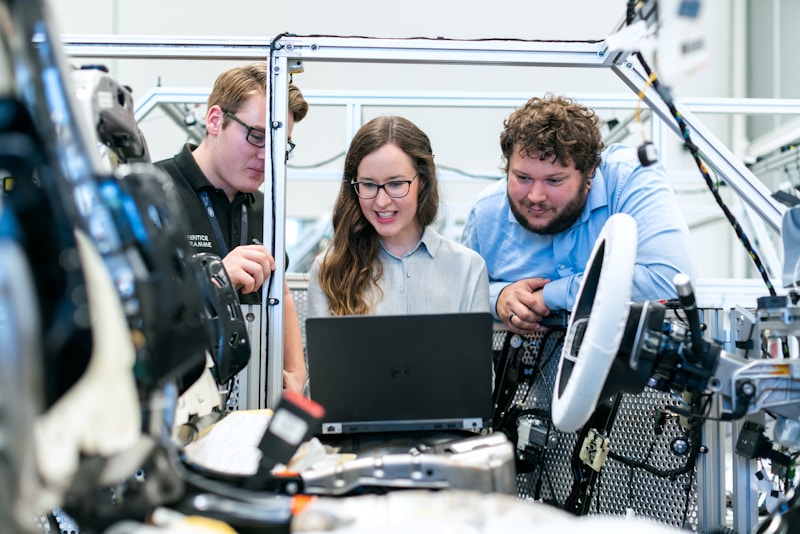
Figure 3: Industrial-scale freeze drying installation for premium food products. Source: Unsplash.
Energy consumption is the dominant operating cost in drying operations. The specific energy consumption (SEC) for each technology type at standard conditions:
| Dryer Type | SEC (MJ/kg H₂O removed) | Thermal Efficiency | Typical Energy Source |
|---|---|---|---|
| Tray dryer | 4.0–6.5 | 35–60% | Electric / Natural gas / Steam |
| Belt dryer | 3.5–5.5 | 50–75% | Natural gas / Steam / Thermal oil |
| Spray dryer | 4.5–7.0 | 45–65% | Natural gas / LPG / Electric |
| Freeze dryer | 12–25 | 15–30% | Electric (compressor + heater) |
ASHRAE Handbook — HVAC Systems and Equipment (Chapter 31, Drying and Storing Farm Crops) provides the reference framework for drying air calculations. For factory-level energy accounting, ISO 50001 (Energy Management Systems) should be integrated with production scheduling.
Continuous belt dryers with waste heat recovery achieve the lowest SEC — approximately 3.5 MJ/kg H₂O removed — making them the most energy-efficient technology for solid food products. Spray dryers with integrated fluid-bed systems come second at 4.5–5.5 MJ/kg. Freeze drying is the least efficient by a factor of 3–5.
For shipment to the United States: NSF/ANSI 4 (commercial cooking and warming equipment) or NSF/ANSI 8 (commercial powered food preparation equipment). For the EU market: CE marking per Machinery Directive 2006/42/EC, EN 1672-2 (hygiene), and EU 1935/2004 (food contact materials). For the Middle East and Southeast Asia: SASO/GSO and ISO 22000 certification are commonly requested.
Tray dryers offer the greatest product flexibility — simply swap trays and adjust temperature/airflow settings. Belt dryers require 30–60 minutes for product changeover (belt speed, zone temperature profile). Spray dryers are product-specific: changing from dairy to vegetable powder requires full CIP and frequently a different atomizer configuration. Freeze dryers are the least flexible in cycle time but can handle different products in separate batches with shelf loading changes.
With proper maintenance, 304/316L stainless steel dryers operate 15–25 years. Belt replacement interval: 3–5 years for polymer mesh, 5–10 years for stainless steel wire. Spray dryer nozzle replacement: every 200–500 operating hours. Freeze dryer compressor overhaul: every 8,000–12,000 hours. Corrosion in tray dryer cabinets from acidic products (fruit drying) is the most common premature failure mode — specify 316L for acid-containing feeds.
Use the formula: Capacity (kg/h feed) = (Target output × (1 − outlet MC)) / (1 − inlet MC). Example: to produce 500 kg/h of dried apple with 8% outlet moisture from 80% inlet moisture: 500 × (1 − 0.08) / (1 − 0.80) = 500 × 0.92 / 0.20 = 2,300 kg/h feed rate. Water removal = 2,300 − 500 = 1,800 kg H₂O/h. Select a dryer with evaporation capacity ≥ 1,800 kg/h.
Choosing the correct industrial drying equipment requires matching the technology to feed characteristics, throughput, moisture targets, and regulatory requirements. Tray dryers suit small-batch, multi-product facilities. Belt dryers deliver the best energy efficiency for medium-to-high throughput solids. Spray dryers are irreplaceable for converting liquids to powder. Freeze dryers serve the premium product segment where quality justifies 3–5× higher energy costs.
Always verify that your supplier provides documented compliance with the standards required for your target export markets — NSF/ANSI, CE, 3-A, or GSO — before placing an order. Request a pilot test at the manufacturer's facility with your actual product before committing to a full-scale line.
Need a quote for industrial drying equipment? Contact Huayi's engineering team with your product type, feed moisture, and target throughput for a matched recommendation.


